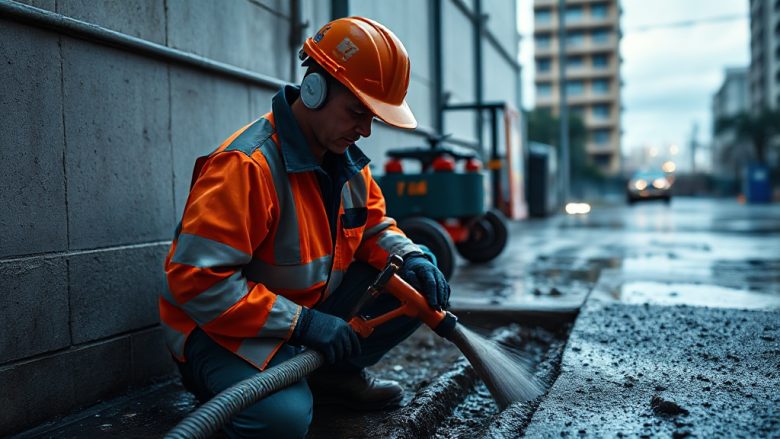
When the Usual Fix Fails: What Should You Do About a Blocked Drain in Mongaguá?
You have already tried the plunger, poured the drain cleaner, and maybe even pushed a garden hose down the pipe. The sink still gurgles, the shower water still rises around your ankles, and the smell is getting worse. If you are in Mongaguá and the DIY route has stopped working, the next step is not to try harder with the same tools — it is to call a professional desentupidora Mongaguá before the blockage turns into a flooded floor or a sewage backup.
This is the situation a friend of mine faced last summer in a ground-floor apartment near the beach. Here is what actually works when the easy methods fail, and how the same logic changes for other kinds of clogs.
Why the Plunger and Drain Cleaner Stop Working
A plunger only moves water back and forth in the first stretch of pipe. If the clog sits three or four metres down the line, or if it is caused by grease, roots or a collapsed section, the pressure never reaches it. Drain cleaner has the same limit: it dissolves a little surface material and then sits there, sometimes corroding the pipe while the blockage stays put.
In Mongaguá, the problem is often compounded by the building’s age and the sandy soil close to the coast. Older PVC or cast-iron lines can have joints that shift, and sand or sediment slowly narrows the pipe. Repeating a failed method is the most common mistake — each attempt adds water and pressure without removing the cause.
My friend’s kitchen sink turned out to be blocked by a grease mat about five metres from the trap. No plunger on earth would have touched it. The technician from a desentupidora Mongaguá SP arrived with a rotating cable, broke through the grease in minutes, and flushed the line with a jet of water.
What a Professional Actually Does That You Cannot Do at Home
The difference is not muscle. It is access and inspection. A proper service starts by locating the blockage, often with a camera pushed into the pipe. That tells the technician whether the clog is grease, roots, scale, a foreign object or a broken section. Only then does the right tool get chosen.
The three main tools and when each is used
- Rotating cable (cabo de aço): best for soft blockages such as grease, soap residue, paper and roots in smaller pipes. It drills through the clog rather than pushing it further.
- Hydro-jetting (hidrojateamento): a high-pressure water jet that scours the full inner wall of the pipe. Used for grease-heavy kitchen lines, sediment, and any line that has been partially blocked for a long time.
- Manual or vacuum removal: for septic tanks, grease traps and inspection boxes where the material has to be removed, not just broken up.
None of these are things you can rent at a hardware store and use safely. A cable in untrained hands can crack a pipe or come back at you, and hydro-jetting at the wrong pressure can damage older connections.
A Step-by-Step Scenario: The Drain That Will Not Clear
Here is the sequence that actually resolved the problem in my friend’s building, and it is the same order a good technician follows.
- Stop adding water. Every litre you pour makes the eventual cleanup bigger.
- Check the other drains. If the toilet, shower and sink all back up together, the blockage is in the main line, not one fixture. That changes the urgency.
- Find the inspection box (caixa de inspeção). Most houses and ground-floor units have one near the street or the side wall. Opening it shows whether the blockage is before or after that point.
- Call for emergency service. For a main-line backup, waiting until morning usually means sewage on the floor. A 24-hour team can be on site the same evening.
- Ask for the inspection result. A good technician tells you what caused the clog and whether the line needs a follow-up cleaning.
In that case, the inspection box showed the blockage was in the building’s main line, shared by four units. One call to a desentupidora em Mongaguá SP handled it, and the technician recommended a preventive hydro-jetting every year to stop the grease from rebuilding.
Variations for Other Situations
Not every failed drain is a kitchen sink. The same logic applies, but the details change.
Shower and bathroom floor drains
Hair and soap scum are the usual culprits, but if the water drains slowly even after removing the grate, the clog is deeper. A cable is usually enough. If the same drain backs up repeatedly, the pipe may have a slight sag where water sits — that needs a camera inspection, not another bottle of cleaner.
Toilets that keep backing up
A toilet that overflows after flushing, especially when other fixtures are fine, points to an object stuck in the trap or a partial blockage in the branch line. Do not keep flushing. A technician with a toilet auger or cable will clear it without removing the fixture in most cases.
Septic tanks and grease traps
If the drains are slow and the yard smells, the tank may be full rather than the pipe blocked. Pumping is not the same as unclogging — the tank has to be emptied and the line checked. In coastal areas like Mongaguá, heavy rain can also raise the water table and make a full tank back up faster.
Commercial kitchens and condominiums
Restaurants and buildings with shared lines need scheduled maintenance, not emergency calls. Grease traps should be cleaned on a fixed interval, and main lines hydro-jetted before the holiday season when occupancy peaks. A single emergency call costs more than a planned visit.
What It Costs and What Changes the Price
There is no single price for drain clearing. The main factors are the type of blockage, the depth and length of the line, the tool required, and whether it is an emergency call at night or on a weekend. A simple kitchen sink cable service is at the low end; a main-line hydro-jetting job with camera inspection is at the high end.
Ask for a quote before work begins and confirm whether inspection and cleanup are included. A cheap call that only pokes a hole in the clog will bring you back to the same problem in a month. A clear diagnosis is worth more than a low headline price.
| Situation | Typical approach | What to ask |
|---|---|---|
| Single slow sink | Rotating cable | Is the clog removed or just pierced? |
| Multiple drains backing up | Main-line cable or hydro-jetting | Is camera inspection included? |
| Septic smell in yard | Tank pumping and line check | Is the tank emptied completely? |
| Recurring blockage | Camera inspection plus jetting | What is the root cause? |
How to Avoid the Same Call Next Year
Once the line is clear, a few habits keep it that way. Never pour cooking oil down the sink — collect it in a jar and throw it away. Use a drain strainer in the shower and kitchen. Flush only toilet paper and waste. And if your building has a grease trap or septic tank, put the cleaning date on the calendar instead of waiting for the smell.
For older properties in Mongaguá, a yearly preventive visit is cheaper than one emergency. A technician can jet the main line and check the inspection boxes before the rainy season, when the ground is already saturated and any blockage becomes a flood.
The Bottom Line for a Stubborn Blockage
When the plunger and the bottle have both failed, stop. The blockage is deeper or harder than home tools can reach, and every extra attempt risks damage. Call a professional, ask what caused it, and get the line properly cleared rather than temporarily opened. That is the difference between fixing the problem this week and repeating it next month.